
JASAL is delighted to announce our new board, who will be in place from April 2025-March 2028. We’re excited to drive JASAL forward over the next 3 years! See here for more information about the board.
JASAL2024 at Soka University
Links to presentation videos, slides, and poster
Videos
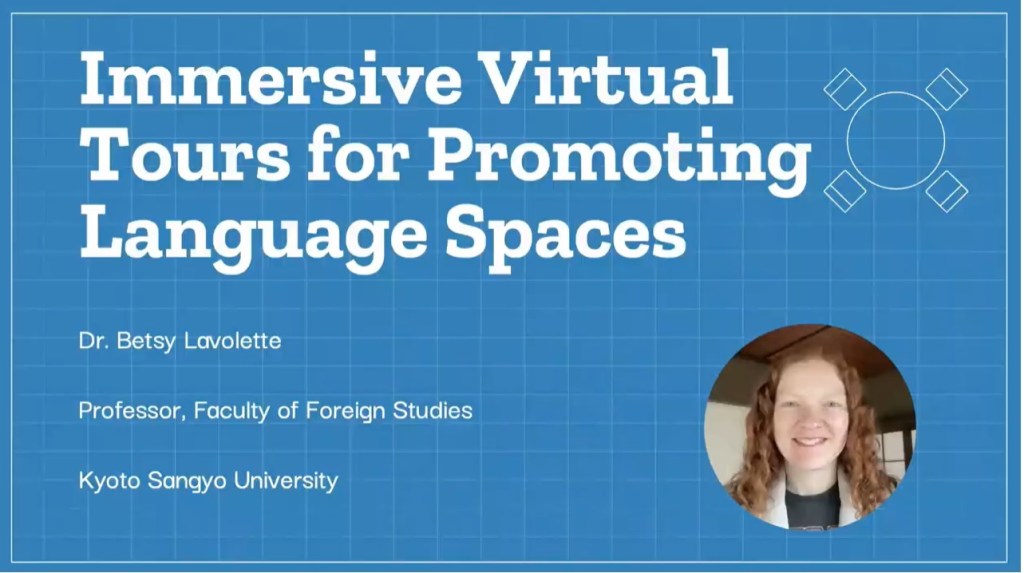
Immersive Virtual Tours for Promoting Language Spaces
Dr. Besty LAVOLETTE, Kyoto Sangyo University
Slides
Immersive Virtual Tours for Promoting Language Spaces
Dr. Besty LAVOLETTE, Kyoto Sangyo University
Digital Tool for Advisors’ Emotions and Advising Practice
Sina TAKADA, Emily MARZIN & Christine PEMBERTON, Kanda University of International Studies

Moving beyond the SAC: Student-Run Community Outreach Events
Katherine THORNTON, Otemon Gakuin University

Implementing Open Dialogue Advising and Reflecting as Praxis
Ryo MORIYA, Shizuoka University & Misako KAWASAKI, Waseda University

Balancing Guidance and Building Student-Staff Autonomy
Prabath Buddhika KANDUBODA, Moe SHOJI & Soraya LIU, Ritsumeikan University

Poster
Facilitating Reflection Using AI-Generated Visual Metaphors
Emily MARZIN & Haruka UBUKATA, Kanda University of International Studies

8th JASAL Online Student Conference(Post-event report)
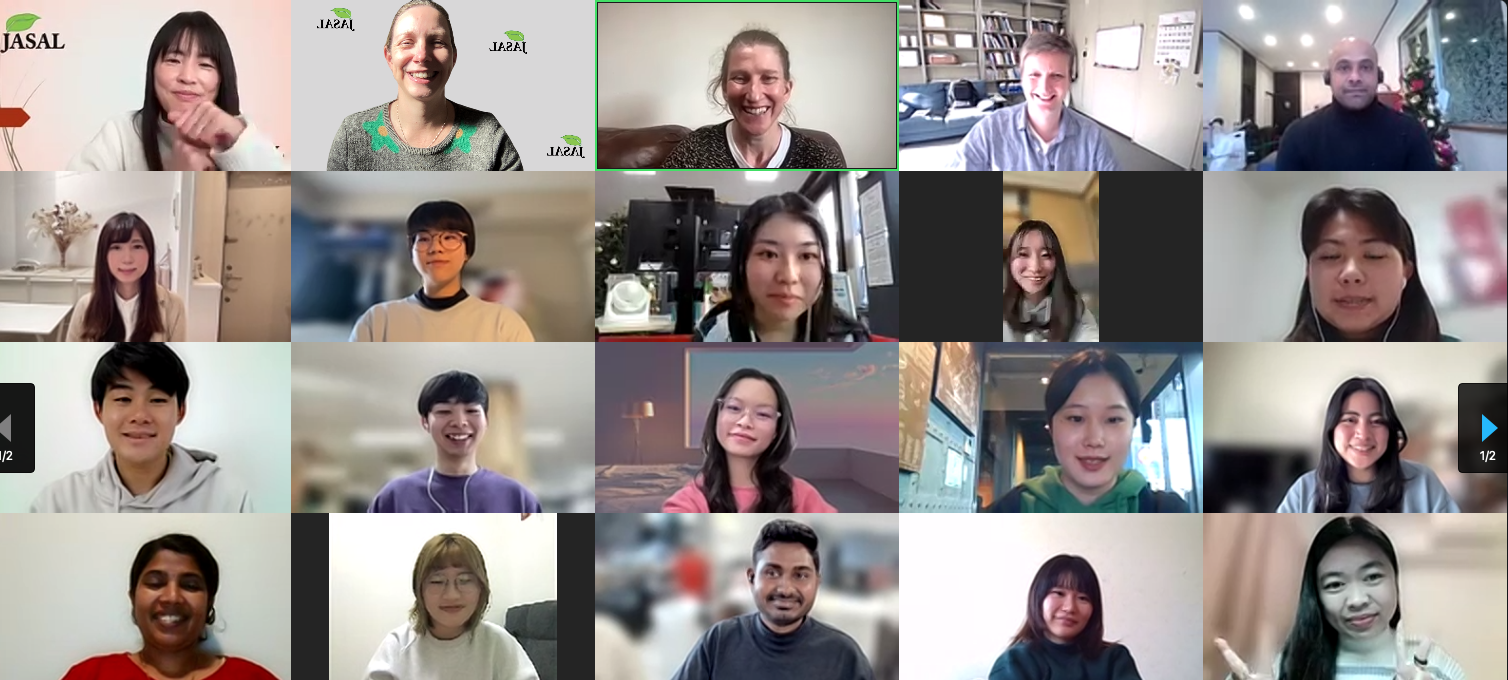
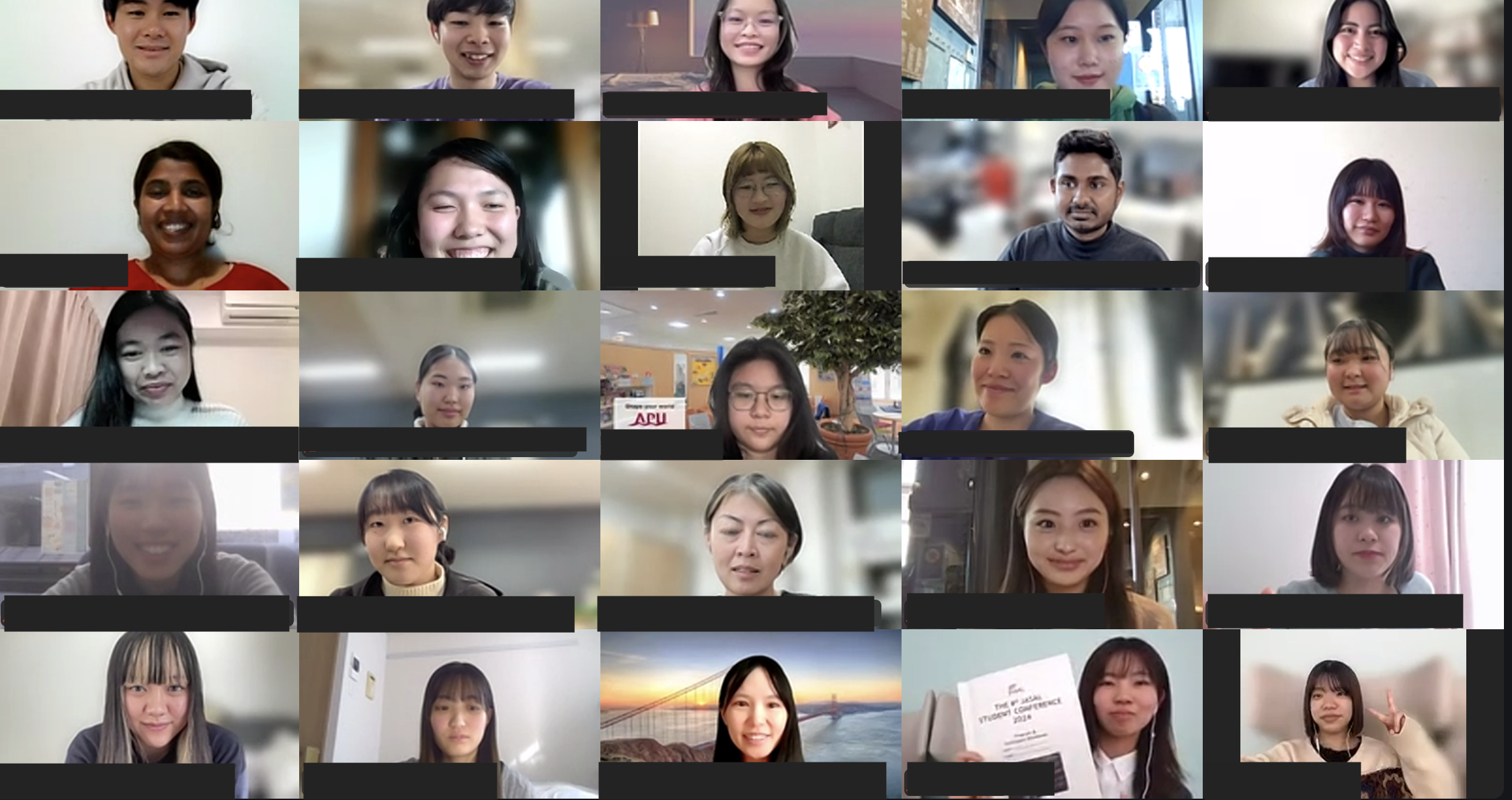
A big thank-you to everyone who presented and participated in our 8th JASAL Student Conference on Saturday, December 7th! Although virtually it was so lovely to see so many students, and to hear many of their inspiring presentations about all the amazing projects they are involved in through their university SALCs across Japan and Canada.
We hope the participants of the conference enjoyed it as much as we organizers did. We had around 30 students presenting and taking part in discussions as well as more than 10 teachers and administrators to support and learn from these student-presenters and student-participants.
It was a wonderful event with many inspiring ideas shared among students and teachers! We, conference organizers, once again would like to say a huge thank-you to all the wonderful presenters who prepared very thoroughly and shared their SALC stories with all of us.
We wish all the best to all the conference participants in realizing their action plans drawn towards the end of the conference.




8th JASAL Online Student Conference
Greetings to all students involved in self-access language learning centers, their advisors, and teachers!
- Are you currently working or volunteering for a self-access center at your university?
- Are you interested in sharing your self-access-related experiences with students from other universities?
- Do you want to meet and hear the stories of other students with similar experiences?
Then please join us for the 8th JASAL Student Conference and share your stories and listen to the stories of others!
Teachers and advisors are your students working on some amazing self-access projects? Or are they new to self-access and want to hear how other universities are doing?
Then please encourage your students to join, present or just attend the 7th JASAL Student Conference. Your students can introduce their facilities and student staff activities, or share their own experiences of learning languages, studying abroad or using their self-access language learning centers.
Presentations can be either solo or group presentations.
Date: Saturday, December 7th
Time: 09:30-13:00
Format: Online (Zoom meeting)
There are two ways to participate:
Option 1 (Present + Attend): Submit your proposal by Tuesday, November 23, 2024, here
Option 2 (Just Attend): Register to participate by Monday, December 01, 2024, here
We, the organizers of Student Conference, are looking forward to seeing you at our online event and hearing your stories about self-access and/or language-learning journeys!
For more information, refer to the PDF below!
※ Please note that this is a student conference. We only accept submissions from students. For more information on the JASAL National Conferences please see this page.
2024 Call & Registration for 8th JASAL Online Student ConferenceDownload
JASAL Forum at JALT2024 (Shizuoka)
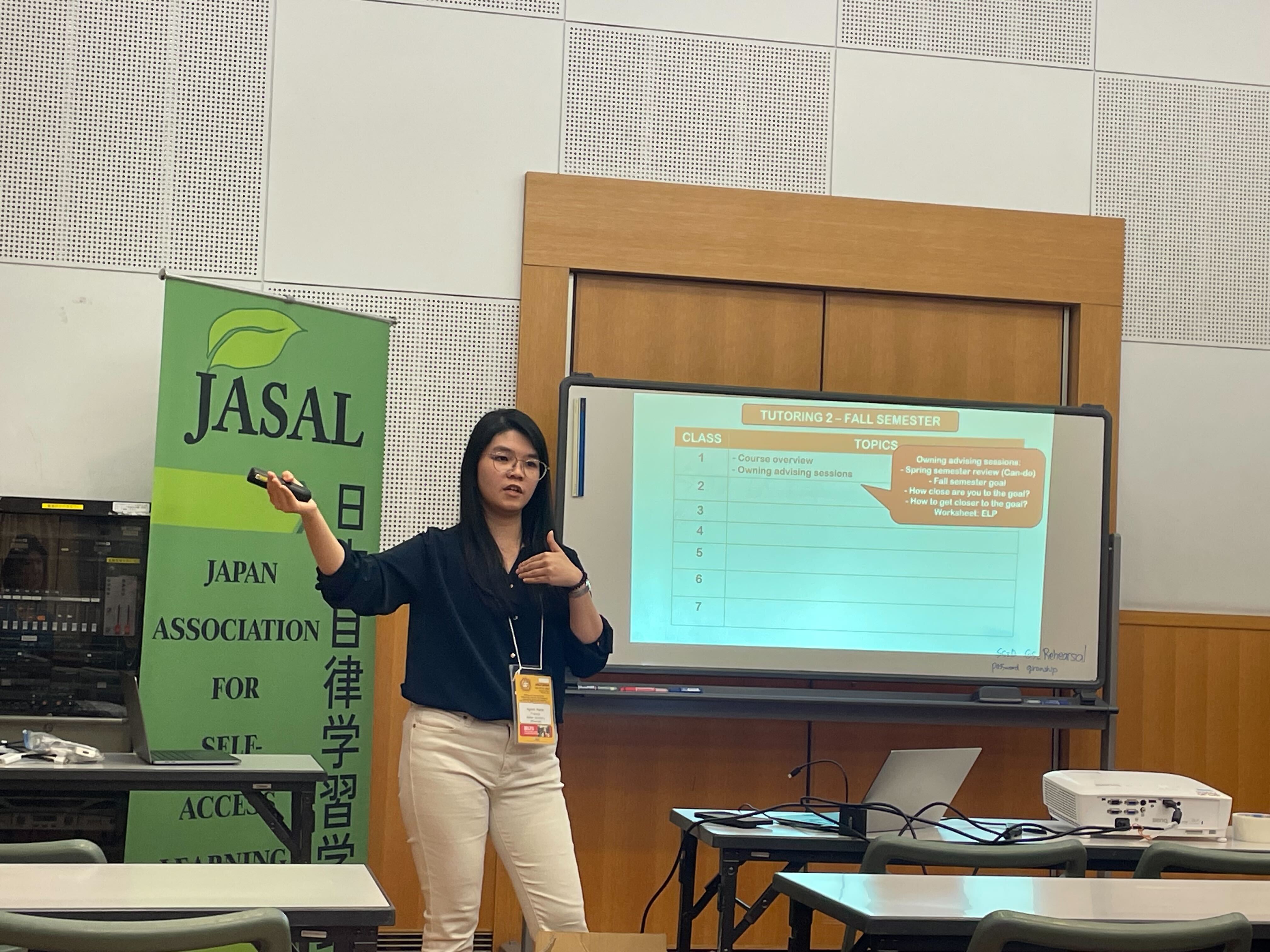
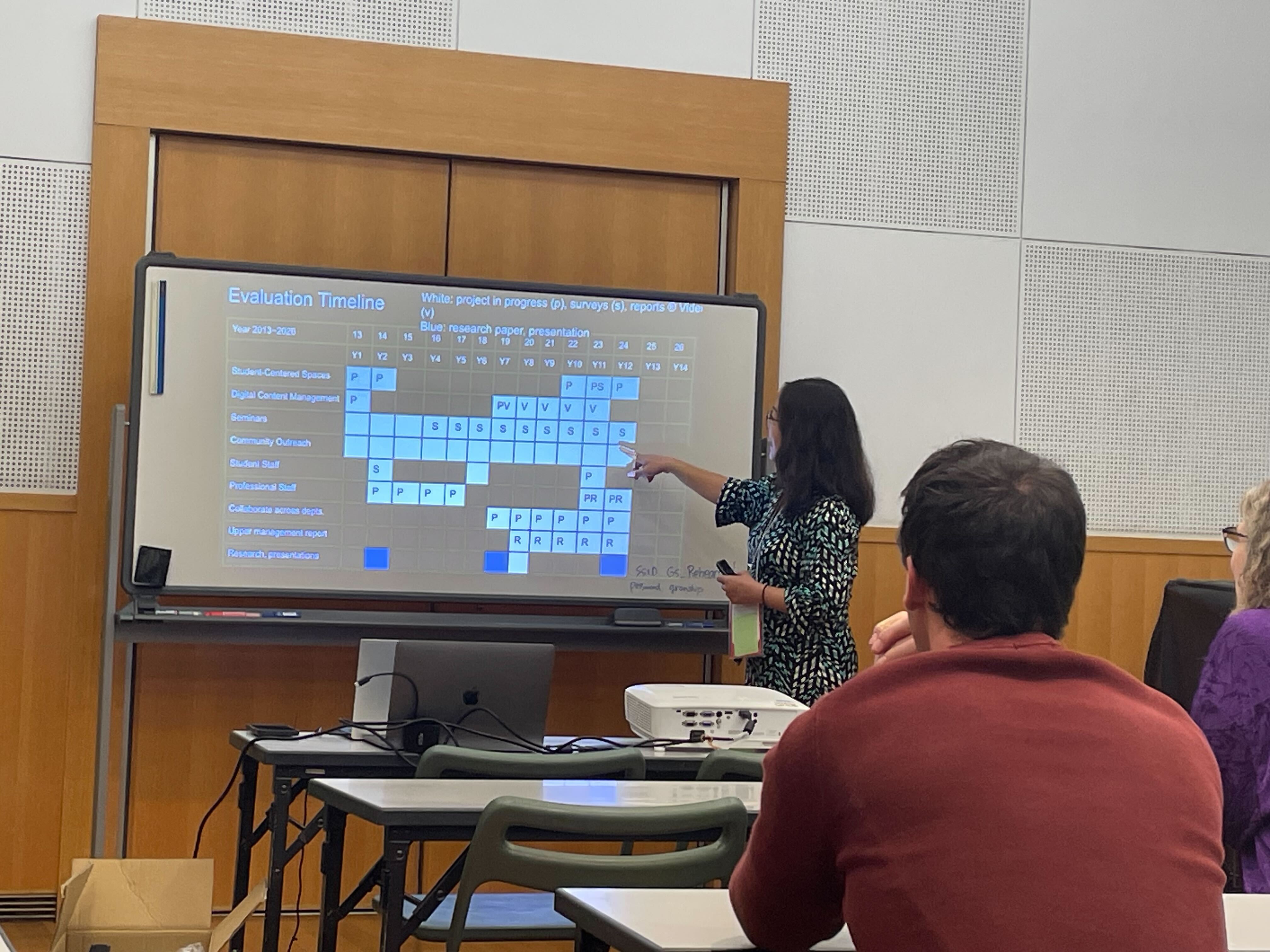
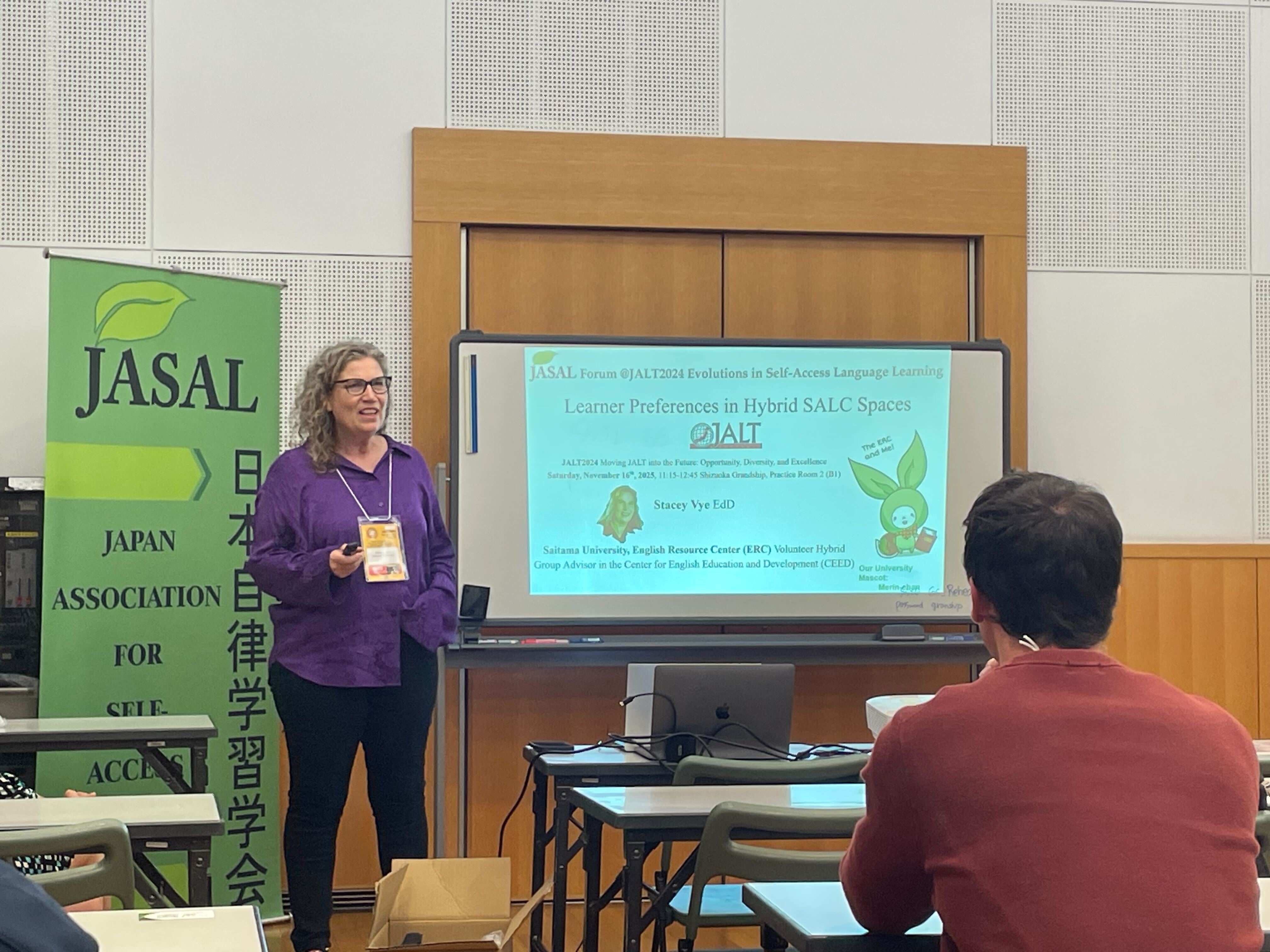
Thank you to everyone who participated in the JASAL Forum at JALT last Saturday, titled Evolutions in self-access language learning. It was a great event, where we got to see both old and new faces!
We had three excellent presentations from members Stacey Vye, Suwako Uehara and Agnes Maria Francis, and a fruitful discussion.

Re-registration required for all members
Hello! This autumn we asked all our members to re-register. The old list of members was retired on October 31st 2024, so if you have not re-registered you will no longer receive emails from JASAL. We don’t want to lose you, so please, please check your email inbox and click on the link to re-register. It takes under two minutes. (We sent a reminder last week!)
If you are unsure if you on the current list, please email us at jasalorg@gmail.com.
Thank you so much for helping us keep our list current.
JASAL2024 Conference Program now available!
Download the conference program with the conference schedule and all presentation abstracts, plus other useful information about this year’s conference from the conference webpage.
Register for the conference to access the sign up form for the Friday SAC tour, order your lunch and reserve your spot at the networking reception. Please note that bento orders and reservations for the networking reception must be received by Wednesday, 16th October.
Registration for JASAL2024 is now OPEN!
You can now register to join us in Hachioji in Tokyo for JASAL2024 at Soka University on Sat 26th October, 2024. Check out the conference page for more details and the registration link.

A separate sign-up form will be provided to participants soon for those interested in joining the SAC tour at the University of Electro-Communications on Friday 25th October (16:45-18:15), and the post-conference networking reception.
JASAL Journal – Call for Submissions (Volume 5, Issue 2)
JASAL Journal Volume 5, Issue 2 is soliciting abstracts for the JASAL Journal for December 2024, with a submission deadline of August 31, 2024. The theme of this issue will be integrating self-access into institutional landscapes, but we will consider all proposals related to self-access language learning. Please send submissions by email (jasalorgATgmail.com) indicating whether you are proposing a research, practice, or review article. In the subject heading, please write “Issue 5(2)”. Feel free to make enquiries to the editorial team by email if you are considering whether to submit a paper.
Suggested topics include, but are not limited to:
- Self-access and curriculum
- Integrating classroom practice and self-access learning
- Faculty involvement in self-access
- Self-access staff/advisor professional development
- Collaboration and collegiality within self-access
- Student-led self-access research
- Faculty/student self-access learning communities
- Defining value of self-access within institutions
- Promotion of self-access within institutions
JASAL Journal Issue 5.1 published!
Thrilled to share the release of Volume 5, Issue 1 of the JASAL Journal!
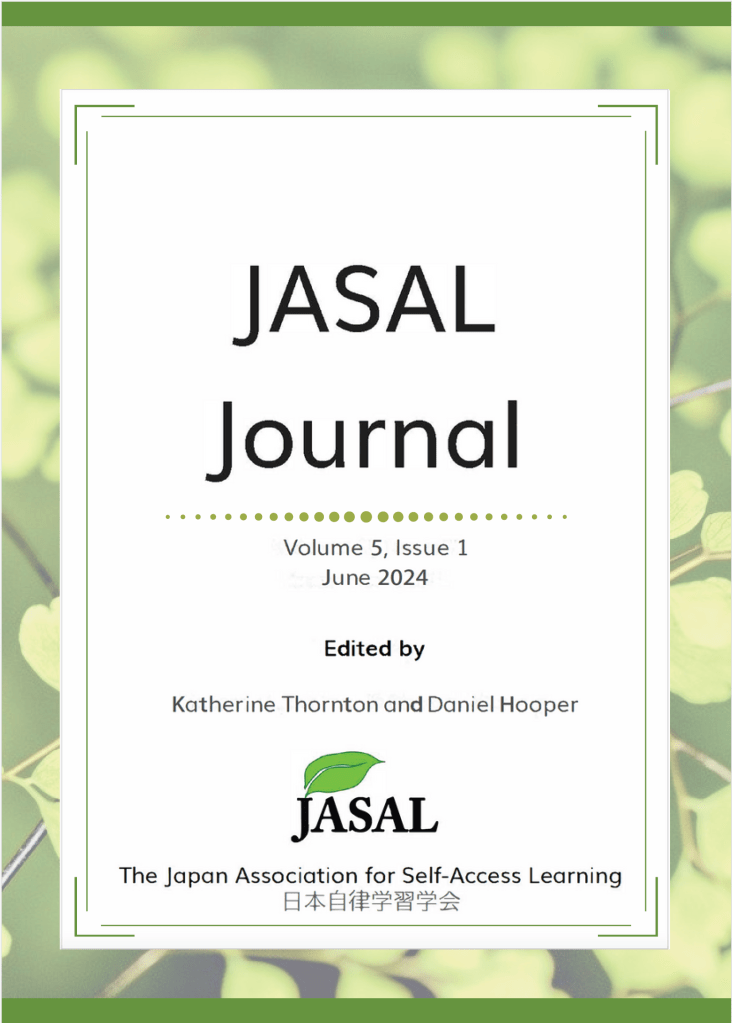
The theme of this issue is social connections between self-access users and its importance in reducing anxiety and promoting engagement in self-access activities. This issue covers a variety of topics of interest to self-access researchers and practitioners, and three reports from recent JASAL events, our 2023 national conference, the latest JASAL Forum held at the 2023 Japan Association for Language Teaching (JALT) international conference, and a report from the December 2023 online student conference.
Thank you to all the contributors for their valuable insight and research in the field of self-access!
A big thank you to the authors, reviewers, the editorial team for their hard work in curating this enriching collection!

