
Host University
JASAL 2026 will take place at Osaka Institute of Technology (OIT), Omiya Campus in Osaka, on Saturday, 10th October, 2026.
Consult the Visitor Access Guide to get further information on how to get to the university
We are also offering a SAC Tour of the Language Learning Center (LLC), the self-access centre at OIT, on the afternoon of Friday, 9th October, and an online component to the conference.

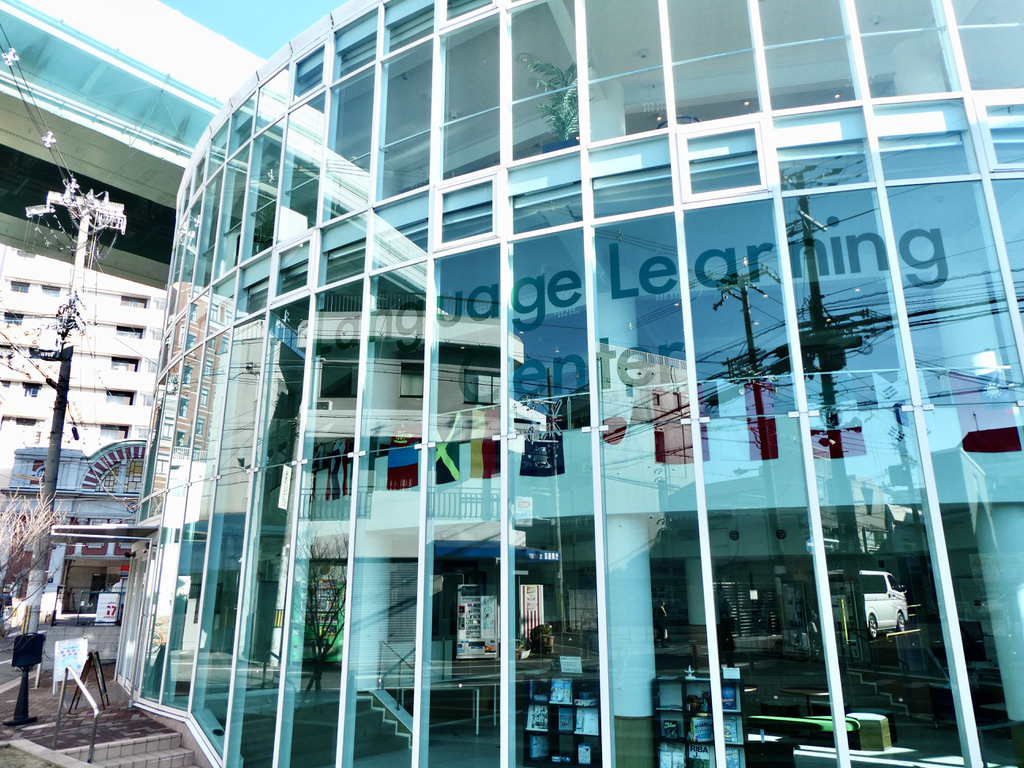
JASAL 2026 will take place at Osaka Institute of Technology (OIT), Omiya Campus in Osaka, on Saturday, 10th October, 2026.
Conference Handbook
The conference handbook is now available to download with important information about the conference, including the schedule and presentation abstracts.
Conference Theme
Empowering Language Learning: Self-Access, Advising, and Technology
Supporting language learners to navigate the affordances offered by technology has been a key aspect of self-access language learning (SALL) since its foundation in the 1970s and 1980s. This has long been a key role for learning advisors and other educators, and is equally important in a world increasingly dominated by mobile technologies and AI.
Join us as we bridge the gap between theory and practice, investigating how the integration of physical spaces, pedagogical support, and digital innovation can empower learners to navigate their own language learning journeys with confidence and purpose.
Plenary Talk
Empowering Learning Advisors: Thinking Routines as Tools to Develop Learner Autonomy in Diverse Environments
Maria de la Paz Adelia Peña Clavel
Associate Professor at the School of Languages, Linguistics and Translation in UNAM, Mexico

Abstract
Advising in Language Learning (ALL) is an intentional mediation process that guides learners to take ownership of their learning and actions to achieve their goals through informed decision-making (Kato & Mynard, 2016). Building on the foundational distinction between “teaching” and “advising” (Gremmo, 1995), and drawing on more recent models grounded in complexity and the ecology of learning (Mynard, 2020; Tassinari, 2022), ALL has evolved considerably. It has moved from physical self-access learning centres (SALCs), hubs, and lounges toward language courses (Skupeňová & Herout, 2024) and the management of diverse virtual and hybrid models (Peters & Mynard, 2021). This is; an evolution that reflects dynamic responses to rapid technological transformation and advances in neuroscience and positive psychology.
Fostering autonomy in these contexts requires advisors to draw on dialogic competencies, socio-affective sensitivity, and empathy—qualities essential for managing the emotions and anxiety that can hinder learning (Kato & Mynard, 2016; Tassinari, 2016). As teachers or advisors, we are constantly searching for approaches and techniques that can help students find their own path toward their learning goals while exercising their autonomy in virtual or physical environments. How can this process be supported concretely, across such diverse and ever-changing settings?
In this plenary, I will address that question directly by illustrating Visual Thinking and Thinking Routines (Project Zero, n.d), originally applied in science and language education (Abdullah, Halim & Zakaria 2014), as adaptable tools. I will demonstrate how I embedded these routines as cognitive tools in collaborative virtual spaces—such as Virtual Exchanges (Teletandem) and “learning to learn” workshops—as well as in one-on-one advising sessions in my context at ENALLT-UNAM in Mexico. By making thought processes explicit, these routines transform abstract reflection into tangible, shareable structures, providing learners a visual image of their thoughts, feelings and learning (Ritchhart et al., 2011). By the end of this talk, attendees will have ideas for incorporating Thinking Routines into their advising or teaching practice.
Bio:
Maria dela Paz Adelia Peña Clavel is an associate professor at the National School of Languages, Linguistics, and Translation (ENALLT) at the National Autonomous University of Mexico (UNAM). She is responsible for the Teletándem Project at the ENALLT Self-Access Centre (Mediateca). She is a tutor for the online Diploma Program for Learning Advisors of SALCs. She is a professor in the Applied Linguistics Program at ENALLT, where she teaches Learner Autonomy and Telecollaboration. She has been an advisor at the Mediateca since 1996. She holds a Master’s degree in Educational Technology from the Monterrey Institute of Technology and Higher Education (ITESM) and a Master’s degree in Virtual Learning Environments from Virtual Educa and the University of Panama. She has just graduated from the Online Diploma Course in Artificial Intelligence and Gamification. She is also a specialist in Virtual Learning Environments, certified by the Organisation of Ibero-American States (OEI) and Virtual Educa. She has presented lectures and workshops at national and international conferences on learner autonomy and learner development in the classroom, in self-access centres, and with digital tools. She is the founder and President of the Academic Research Network of Learner Autonomy in México. Her research interests are gamification and learner training for Learner Autonomy, Telecollaboration, and the impact of AI in SALCs.
Conference Schedule
Friday 9th October
17:30-19:00 – OIT Language Learning Commons (LLC) SAC tour
(free to all attendees, sign up via the registration form – see below).
Saturday 10th October
09:00-18:00 – Conference at OIT Omiya Campus
(please note that this is NOT the downtown Umeda Campus. Omiya campus is most easily reached by bus 34 from Osaka station, or a 15-minute walk from Omiya-Senbayashi subway station on the Tanimachi line).
Access the detailed Conference Schedule here
20:00-22:00 – Networking Reception in Umeda (see information below)
Sunday 11th October
From 11am – Gentle walk (2.5km one way on paved roads) to Minoo Falls, possibly followed by lunch/a trip to Minoo Brewery.
Registration
Registration for the conference is now open. Please sign up to attend the conference here.
Registration Fees:
On-site in Osaka:
JASAL Members: ¥2500
Non-JASAL members: ¥3000
Online: Free
Undergraduate students are entitled to free registration.
Membership (free) must be active prior to the day of the conference. Please note that all presenters must be JASAL members.
Please also indicate whether you will join the SAC Tour, reception and order a bento.
If you present, payment should be completed by 31st August for the Saturday lunch bento & Saturday evening networking reception. If you are only paying for the conference registration (and not presenting), payment will be accepted until 7th October.
Lunch
Standard bento with tea: ¥1460
Vegetarian bento with tea ¥1460
Non-vegetarian bentos contain fish and/or meat, but specific ingredients cannot be guaranteed.
Networking Reception
Non-vegetarian course + all-you-can-drink: ¥5000 per person (including tax).
Vegetarian option – all-you-can drink ONLY (order food off the menu and pay yourself): ¥2000 per person (including tax).
Venue: Wakura (藁蔵 ) (Izakaya)
Location: 〒530-0012 Osaka, Kita Ward, Shibata, 2 Chome−3−9 excelビル 5FUmeda (close to, but not inside, the Grand Front shopping center). A few mins walk from all major train & subway lines)
https://maps.app.goo.gl/SKo6RuX9GzDwMQw26
Time : 20:00-22:00
All payments should be made by bank transfer. If you are attending onsite from overseas and are unable to make a bank transfer, please contact us at treasurer.jasalorg@gmail.com
Bank transfer information is included in the registration form and will be sent to you along with the form confirmation.
Call for Papers
At this year’s JASAL conference we invite practitioners and researchers to examine how advising in language learning provides the essential human scaffolding for self-directed paths. Furthermore, we seek to analyze how emergent technologies, from AI-driven personalization to immersive digital environments, can be harnessed to support, rather than replace, the reflective process.
We welcome submissions on this and other self-access related topics, such as:
● Innovations in learning advising/counselling/coaching
● Influence of emergent technologies and AI on self-access
● Virtual self-access
● SAC design and layout
● Self-access and curriculum, learning program design
● Managing and administrating self-access centres
● Learning communities and learner involvement in SACs
● Student perspectives on SALL
● Assessment of self-access SALL
● Research design in SALL
● Professional development for SALL / Learning advisor education
● Promotion of SACs & SALL
● Lifelong learning
● Study abroad & SALL
Presentation Formats
We are accepting proposals for the following kinds of presentations. Please note that at this year’s conference we will have a limited number of online presentation slots available.
- Research presentation (on-site or online) (20+5 mins)
- Practices presentation (on-site or online) (15+10mins)
- Workshop (on-site only) (45 mins)
- Poster session (on-site only)
When submitting your proposal, please indicate if you are only able to accept an online presentation slot. All presenters should be JASAL members at time of registration. (To join JASAL, please send us an email, and include the information requested on the website.)
We welcome submissions in both English and Japanese. Please note that each presenter should be the lead presenter on only ONE submission, and may appear as a co-presenter on only one other submission. Once received, proposals will be blinded and peer-reviewed by at least two members of the JASAL board to ensure quality and relevance to JASAL.
Undergraduate students are welcome to submit to one of these formats with a member of staff (faculty member or administrator), but we encourage these students to participate in the dedicated student conference and other student-centred events, where they will have more opportunities to interact with peers.
Submit a Proposal
Deadline for submissions: Sunday, 12th July 2026 (Submissions are now closed).
Please submit your proposal here.
This will be a 3-day weekend (for those of us who get the national holiday!) so we recommend booking accommodation as soon as possible.


One thought on “JASAL 2026 National Conference”
Comments are closed.